
Gripping Systems
Mechanical gripping systems quickly grip and release parts, both on our robotic systems and on stationary fixtures.
How It Works
A gripper applies force to hold a part. Most of our systems are pneumatic and use air pressure to apply linear force. Servo-driven grippers need no air and can regulate exactly how much force is applied to the part.
Gripper Types
Our most common types are parallel and centric grippers, but we choose the gripper to suit the application.
- Parallel gripper: jaws move toward each other along a straight line.
- Centric gripper: jaws close evenly around a center point.
Tooling
Each gripper is fitted with custom tooling shaped to the part. This tooling is also called jaws or gripper fingers.
Dual Grippers
Mounting two grippers on the end of the robot arm lets it unload a finished part and load a new one in a single visit to the machine. This shortens cycle time and makes the robot’s path more efficient.
The two sentences under “Parallel gripper” and “Centric gripper” describe how each type works, which the original page didn’t explain. Remove them if you’d rather keep only the image captions.
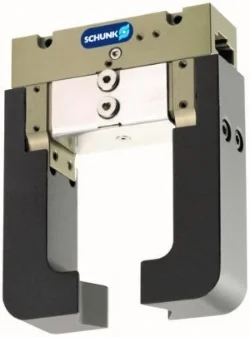
Parallel Gripper Example
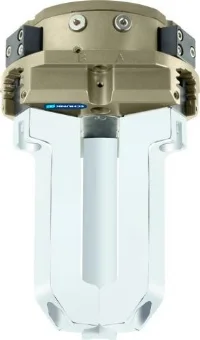
Centric Gripper Example
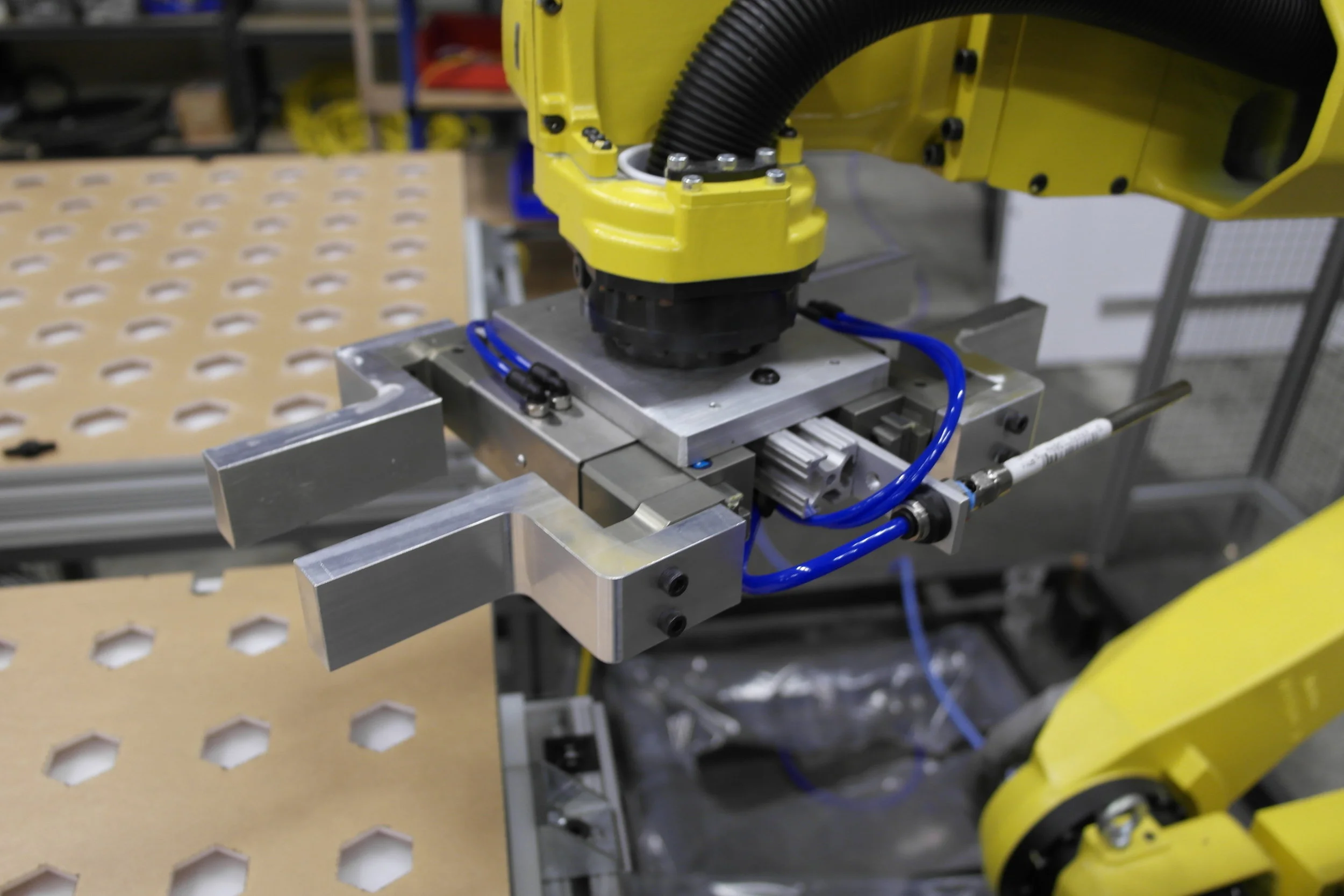
Gripper Example